
Blog
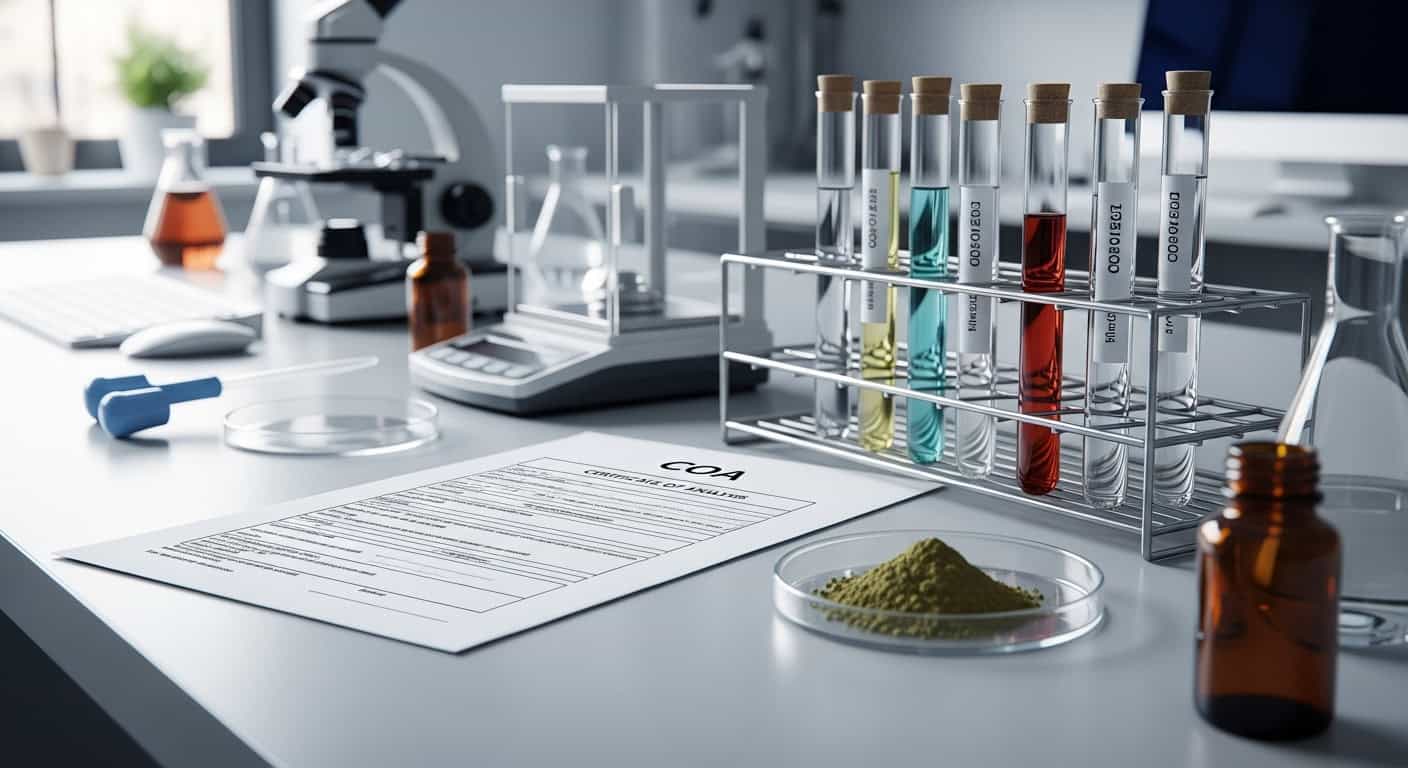
Kratom lab testing is the process of sending kratom powder or capsules to an independent laboratory to measure alkaloid potency and screen for contaminants, and a certificate of analysis (COA) is the report listing those results. A complete COA shows the mitragynine percentage alongside heavy metal and microbial screens for a specific batch. This guide explains how the testing works and how to read a COA before you buy.
Lab testing for Kratom products has become an important part of the marketplace. Third-party laboratories examine Kratom plant material to check for everything from alkaloid content to potential contaminants. The results get compiled into a document called a certificate of analysis, often abbreviated as COA. This report tells you exactly what a lab found when they tested a specific batch of Kratom.
This guide will walk you through everything you need to know about Kratom lab testing, how certificates of analysis work, and how to read them like a pro. By the end, you will feel confident evaluating test results and choosing products that meet your standards.
What Is Kratom Lab Testing
Kratom lab testing refers to the process of sending Kratom products to a laboratory for scientific analysis. These tests examine the chemical makeup of the Kratom plant material and check for any unwanted substances that might be present.
A typical Kratom lab test looks at several key areas. The most important is the alkaloid profile, which measures the concentration of active compounds like mitragynine. This tells you the potency of the product you are considering. Labs also test for contaminants such as heavy metals, bacteria, mold, and other microorganisms that could potentially be present in poorly processed or stored Kratom.
Third-party testing means the lab works independently from the company selling the product. This separation helps ensure the results are unbiased and accurate. When a Kratom brand uses third-party testing, they are essentially inviting an outside expert to verify the quality of their products.
The testing process usually starts when a manufacturer sends a sample of their Kratom powder or capsules to a qualified laboratory. The lab technicians then run various analyses using specialized equipment. Once complete, they compile the findings into a certificate of analysis that the company can share with customers.
Why Kratom Lab Results Matter
Kratom lab results matter because they tell you the exact potency and purity of a product before you buy it. The information in these reports directly affects what you experience when you use a product.
Potency matters because different Kratom products can vary widely in their strength. A lab report shows you exactly how much mitragynine is present, which helps you dose appropriately and compare products fairly. Without this information, you are essentially guessing about what you are getting.
Contaminant testing protects you from potential harmful substances. Heavy metals like lead, mercury, and arsenic can accumulate in plants grown in contaminated soil. Bacteria and mold can develop during improper storage or processing. Knowing that a product has been tested for these issues gives you peace of mind.
Batch-specific testing means each production run gets its own report. This matters because Kratom is a natural plant product, and alkaloid levels can vary from one harvest to another. A COA tied to a specific batch tells you about that exact product, not just a general description from an earlier time.
Understanding the Certificate of Analysis
A certificate of analysis is the official document that contains all the findings from lab testing. Think of it as a report card for your Kratom product. Every reputable company should be able to provide this document for their products.
The COA typically includes several standard sections. The header usually shows the company name, product name, batch number, and testing date. This helps you match the report to the specific product in your hands. Batch numbers are particularly important because they link the report to exactly when that product was made.
The main body of the certificate contains the actual test results. Each test performed gets its own line or section, showing what was checked, the method used, and the result found. Results are often compared against acceptable limits to make it easy to see whether a product passed or failed certain criteria.
The footer of a COA usually includes information about the laboratory that performed the testing. This includes the lab name, their credentials, and sometimes their contact information. You can use this to verify that the lab is legitimate and qualified to conduct these analyses.

Key Components of a Kratom COA
A kratom COA has three core components: the alkaloid profile, the potency results, and the contaminant screens. Knowing what each one means helps you extract the most useful information from the document.
The alkaloid profile section lists the various compounds found in the Kratom and their concentrations. Mitragynine is typically the star compound here, but labs often check for several other alkaloids as well. This section tells you exactly what active ingredients are present and in what amounts.
Potency testing quantifies how strong a product is. Higher mitragynine levels generally indicate stronger effects, though other factors play a role too. This information lets you compare different products objectively rather than relying on marketing claims.
Contaminant screening checks for substances that should not be in your Kratom. Heavy metals testing looks for toxic metals that could harm your health over time. Microbiological testing screens for bacteria, yeast, mold, and other microorganisms. These tests ensure the product is safe for consumption.
Solvent testing is sometimes included, especially for products that use extraction processes. This checks whether any residual chemicals from the manufacturing process remain in the final product. While not always necessary for plain Kratom powder, it becomes important for concentrated or extracted products.
How to Read a Kratom Lab Report
Reading a kratom lab report means matching the batch number, checking the mitragynine percentage, and confirming contaminants fall within safe limits. Start by finding the product name and batch number at the top of the document. Make sure these match the product you are actually holding.
Next, locate the section showing alkaloid content. Look for the mitragynine percentage or concentration. This number tells you about the potency of the product. Write it down so you can compare it with other products you are considering.
For contaminant results, find each tested substance and check whether it shows a result within acceptable limits. Many COAs use simple “pass” or “fail” indicators, while others show actual numerical results. If heavy metals or microorganisms are listed as “not detected” or are below threshold limits, that is a good sign.
Pay attention to the testing methods listed. Reputable labs use standardized testing protocols, and these should be referenced in the COA. If you see vague descriptions or missing methodology information, that might indicate a less reliable report.
Third-Party Testing Explained
Third-party testing means a laboratory independent of the manufacturer conducts the analysis. This separation creates a system of checks and balances that benefits everyone involved.
When a company runs their own tests, there is always potential for bias, even if unintentional. Third-party labs have no stake in the outcome, so their results tend to be more objective. This independence is a key factor in establishing trust between sellers and buyers.
Not all third-party labs are equal, though. Look for laboratories with appropriate credentials and experience in botanical testing. A legitimate lab will typically display their certifications and qualifications openly. If a company cannot tell you who conducted their testing, that should raise questions.
Some companies go above and beyond by using multiple third-party labs for different types of testing. This approach provides additional verification and shows a genuine commitment to transparency. It also makes it harder for any single lab to influence results.
Heavy Metals in Kratom Products
Heavy metal testing is one of the most important checks you can find on a Kratom COA. Metals like lead, cadmium, arsenic, and mercury can accumulate in plants grown in contaminated environments.
The Kratom plant grows naturally in Southeast Asia, primarily in countries like Thailand, Malaysia, and Indonesia. Industrial activities, agricultural practices, and natural geological conditions can all contribute to metal contamination in soil. Plants absorb these metals through their root systems, concentrating them in their leaves and stems.
Since Kratom users often consume the plant regularly over extended periods, even low-level metal exposure can become significant over time. Heavy metals build up in the body and can cause health problems with long-term exposure. This is why checking for heavy metals on a COA matters so much.
Responsible Kratom companies source their products from regions with clean soil and test their batches regularly. The COA should clearly show results for the most common heavy metals, with all values falling within safe consumption limits.
Understanding Alkaloid Profiles
The alkaloid profile of Kratom describes the spectrum of active compounds present in the product. Mitragynine is the most abundant and well-known alkaloid in the Kratom plant, but it is far from the only one.
Different alkaloids interact with your body in various ways, contributing to the overall experience. Some are more dominant in certain strains or regions. The specific combination of alkaloids affects how a particular batch of Kratom behaves.
When you read a detailed alkaloid profile from a lab, you get a complete picture of what is in your product. This goes beyond just knowing the mitragynine percentage. You learn about the full chemical composition, which can help explain differences between products that might otherwise seem similar.
Not all COAs include comprehensive alkaloid profiles. Some labs only test for mitragynine because it is the primary compound of interest. More detailed testing costs more, but it provides richer information for those who want to understand their Kratom fully.

Potency and Product Selection
Potency, measured as mitragynine content, is the lab result that most directly shapes which kratom product suits your needs. Understanding how to use this information helps you find products that match your needs and expectations.
Products with higher mitragynine content tend to produce stronger effects at lower doses. If you are looking for something more potent, you can look for COAs showing elevated alkaloid levels. Conversely, if you prefer milder products, you can search for options with lower potency numbers.
Comparing potency across different products requires looking at the actual numbers, not just marketing descriptions. A product labeled “premium” might actually have lower alkaloid content than a “standard” product from a different source. The lab results tell the true story.
Keep in mind that potency is not the only factor to consider. Product quality, processing methods, and freshness all play roles in how a Kratom product performs. Two products with identical alkaloid percentages can still feel quite different in practice.
Reading QR Codes on Kratom Products
QR codes on kratom packaging link directly to the certificate of analysis for that specific batch. These codes provide a convenient way to access lab results using your smartphone.
Scanning a QR code typically takes you directly to the certificate of analysis for that product and batch. This eliminates the need to search through websites or request documents from customer service. The information appears instantly and is specifically tied to what you are holding.
QR codes work best when they link to current, accurate information. Check that the batch number in the digital COA matches the product you have. Some companies update their QR codes regularly, so an older code might point to outdated information.
Not every company uses QR codes, and not all QR codes work reliably. If scanning fails, look for the COA on the company website or contact their support team. A reputable company will always be able to provide their testing documentation somehow.
Batch Testing Versus Composite Testing
Batch testing analyzes a single production run, while composite testing averages samples from several batches into one report.
Batch testing analyzes a specific production run or harvest batch. Each batch gets its own unique COA reflecting the characteristics of that particular group of products. This approach captures natural variations between different harvests or production cycles.
Composite testing combines samples from multiple batches into one analysis. The resulting COA represents an average across all those samples. While this can provide a general picture of product quality, it may mask variations between individual batches.
For most purposes, batch-specific testing provides more useful information. You know exactly what was tested and can verify that your product comes from that tested batch. Composite results might give a company a more favorable average to display, but they do not tell you about the specific product you purchased.
Red Flags in Kratom Lab Reports
Red flags in a kratom lab report include missing batch numbers, outdated test dates, and vague descriptions with no numerical results. Learning to spot potential problems helps you avoid unreliable information.
Missing information is often a warning sign. A legitimate COA should include the company name, product identification, batch number, testing date, and laboratory information. If any of these elements are absent or unclear, approach with caution.
Outdated testing dates suggest a product may have been sitting on shelves for a long time. Kratom can change over time, and old test results may not accurately reflect current product quality. Look for recent testing that matches products currently available.
Generic or vague descriptions do not provide enough information to make informed decisions. A proper COA names specific tests, shows actual numerical results, and references testing methods. Vague statements like “tested for purity” without supporting data leave too many questions unanswered.
Finding Reliable Kratom Lab Results
Reliable kratom lab results are available directly from transparent vendors, usually on the product page or through a QR code. The best sellers make this information readily available to anyone who wants to see it.
Company websites often host a library of COAs organized by product and batch. You can usually search for the specific product you are considering and find its corresponding test results. This self-service approach indicates confidence in their testing programs.
Some companies include printed QR codes or direct links on their packaging. Others provide paper copies of COAs upon request. The method matters less than the willingness to share information openly.
If you cannot find lab results for a product you are interested in, ask the company directly. Their response, or lack thereof, tells you a lot about their commitment to transparency. Companies that refuse to share testing information or make excuses should raise concerns.
The Role of Laboratories in Kratom Quality
Independent laboratories supply the equipment and expertise that make kratom quality verification possible. Their expertise and equipment make accurate testing possible.
Modern testing facilities use sophisticated instruments like mass spectrometers and high-performance liquid chromatography machines. These tools can identify and quantify even tiny amounts of various substances with remarkable precision.
Lab technicians interpret results and compile them into readable formats. They also ensure testing methods meet scientific standards and produce consistent, reliable data. Without this professional expertise, companies would have no way to verify their product quality objectively.
Some laboratories specialize in botanical testing and have extensive experience with plant products like Kratom. This specialization means they understand the unique challenges of testing natural plant material and can account for factors that might affect results.
What Gets Tested in a Complete Panel
A complete kratom testing panel covers potency, microbiological contaminants, heavy metals, and chemical residues. Knowing what a complete panel includes helps you evaluate whether a COA is thorough.
Potency testing forms the foundation, measuring the active alkaloid content. This typically focuses on mitragynine as the primary compound of interest. Some labs expand this to include the full alkaloid profile for more detailed analysis.
Microbiological testing checks for bacteria, yeast, mold, and other microorganisms. These tests are especially important for products that might be exposed to moisture or stored in warm environments where microbial growth could occur.
Chemical testing screens for solvents, pesticides, and other chemical residues. While not always included in basic panels, comprehensive testing should address these potential contaminants.
Heavy metal analysis uses sensitive instruments to detect trace amounts of toxic metals. This testing ensures products meet safety standards for metal contamination regardless of growing conditions.
Interpreting Test Result Numbers
Interpreting kratom test numbers comes down to reading potency as higher-is-stronger and contaminants as lower-is-safer.
For potency, higher numbers indicate stronger products. Mitragynine content might be expressed as a percentage or in milligrams per gram. Either way, higher values mean more active ingredient in your product.
For contaminants, lower numbers are better. Heavy metal results should fall well below established safety thresholds. Microbiological counts should show organisms as absent or present only at negligible levels.
Many COAs include reference limits alongside actual results. These limits define acceptable ranges for each substance. Results within these ranges indicate passing performance, while results outside suggest potential problems.
Storing and Using COA Information
Storing COA information means saving the reports by batch number so you can compare products over time. Building a personal reference library of COAs from products you trust creates a valuable resource.
Save COAs digitally or keep organized paper copies with your product inventory. Note the batch numbers and dates so you can reference specific information later. This practice helps you track which products worked well and which did not meet your expectations.
Comparing COAs across different purchases builds your understanding of what quality looks like. You start recognizing patterns in testing and develop preferences based on actual data rather than marketing claims.
Share your knowledge with others in the Kratom community. When friends ask about choosing products, pointing them toward COA resources empowers them to make their own informed decisions.
The Future of Kratom Testing
Kratom testing standards continue to evolve as the industry matures. Better practices and improved technology raise the bar for product quality across the market.
Some advocacy groups and industry organizations are working to establish standardized testing protocols. These efforts aim to create consistent requirements that all responsible companies would follow. Such standards could make it easier for consumers to compare products fairly.
Advances in testing technology make more comprehensive analysis possible at lower costs. What once required expensive laboratory equipment might eventually become accessible to smaller companies and even individual users. This democratization of testing information benefits everyone.
Greater transparency generally leads to better products. When companies know customers will review their testing data, they have stronger incentives to maintain quality throughout their supply chain. This market pressure complements regulatory efforts and voluntary compliance.
Building Your Testing Knowledge
Testing knowledge builds as you compare COAs across products and track which results match your own experience. Start by examining COAs from products you already use and trust.
Compare the results from different companies to see how they stack up against each other. You might discover that products you assumed were similar actually have quite different profiles. This hands-on approach teaches more than any abstract explanation.
Stay curious about new testing developments and methodologies. The science behind lab analysis continues to advance, and what you learn today might expand further tomorrow. Following industry news keeps you informed about emerging best practices.
Join discussions with other Kratom users who share your interest in quality verification. Community knowledge supplements formal information and often surfaces practical insights you might not find elsewhere.

Making Better Product Choices
Better kratom product choices come from requiring a current COA, matching the batch number, and prioritizing clean contaminant results. Knowledge transforms you from a passive buyer into an active participant in quality assurance.
Start by requiring COAs from any company you consider purchasing from. Refuse to support businesses that cannot or will not provide this information. Your purchasing decisions shape market incentives and reward transparency.
Use testing data to match products with your specific needs. Someone seeking strong products will prioritize high-potency options, while others might focus on clean contaminant profiles. The data enables personalized decision-making.
Document your experiences with different products and cross-reference them against their COAs. Over time, you develop an intuitive sense for what lab numbers mean in practical terms. This personal knowledge enhances your ability to choose wisely.
What a Complete Kratom Lab Report Should Cover
A thorough kratom lab report should screen for biological and chemical contaminants in addition to confirming alkaloid potency. Heavy metal panels typically check for lead, cadmium, arsenic, and mercury, each measured in parts per million or parts per billion. Acceptable limits depend on the regulatory framework being applied: Kratom Consumer Protection Act standards in several U.S. states set explicit thresholds, while general dietary supplement frameworks set looser ones.
Pathogen screens cover the most common contamination risks for botanical powders. Salmonella is the most commonly tested bacterial pathogen because it has been the cause of past kratom product recalls. Escherichia coli is the other standard bacterial test, with a target of non-detectable in finished product. A high-quality kratom vendor will publish results for these screens alongside the alkaloid assay, and either of them missing from a published lab report is a flag worth asking about.
How to Read Kratom Lab Reports as a Consumer
To read kratom lab reports effectively, focus on three numbers. First, the mitragynine percentage, usually expressed as a percentage of total weight; values from quality vendors typically fall in the 1.0 to 1.8 percent range for unenhanced powder. Second, the 7-hydroxymitragynine percentage, which should be present at a small fraction of the mitragynine level in plain leaf. Third, the contaminant results: heavy metals well below regulatory thresholds and pathogens at “non-detectable” level.
Kratom vendors who post current third-party lab reports for each batch make this evaluation straightforward. Kratom Consumer Protection Act language in states that have adopted it requires this level of transparency from compliant vendors, and forward-looking vendors voluntarily meet those standards even in jurisdictions without the law. As a kratom consumer, getting in the habit of opening the lab report PDF for each new batch and spending sixty seconds on these three checks is the single most useful quality discipline you can build into your buying routine.
Kratom Lab Testing questions
What Should I Look for First on a Kratom Certificate of Analysis?
Start by confirming the product name and batch number match what you are purchasing. Then look for the potency section showing mitragynine content. After that, check contaminant testing results for heavy metals and microorganisms. Finally, verify the testing date is recent and the laboratory information is clearly displayed.
How Often Should Kratom Companies Update Their Testing?
Reputable companies should test each new batch of products rather than relying on old results. Testing should be current within the past few months for products sitting on shelves. If you cannot find recent COAs, consider purchasing from a company with more consistent testing practices.
Can I Request Lab Results for a Specific Batch?
Yes, most reputable companies can provide COAs for specific batches upon request. Contact their customer service with the batch number from your product. If a company cannot or will not share this information, that should influence your purchasing decision.
What Does “Third-Party” Testing Mean?
Third-party testing means an independent laboratory conducted the analysis rather than the manufacturer testing their own products. This separation helps ensure unbiased results since the testing lab has no financial stake in how the products perform.
Are All Laboratories Equipped to Test Kratom?
No, not all laboratories can properly analyze Kratom products. Look for labs with experience in botanical testing and appropriate credentials. The COA should include information about the laboratory so you can verify their qualifications.
Why Do Alkaloid Levels Vary Between Batches?
Kratom is a natural plant product, and alkaloid content naturally varies based on growing conditions, harvest timing, leaf maturity, and processing methods. This variation is normal and expected, which is why batch-specific testing provides more accurate information than composite results.
Understanding Kratom lab testing and certificate of analysis transforms how you approach purchasing decisions. The information in these reports empowers you to choose products confidently based on actual data rather than marketing promises. When you know how to read and interpret lab results, you become a smarter, more informed consumer in the Kratom marketplace.
If you want to see this kind of testing in practice from another Canadian supplier, our sister store Kratom Active publishes the same standard for its lab-tested kratom.
Ready to order? Buy kratom online in Canada from Kratom Earth and get lab-tested powder and capsules delivered by Canada Post.

Keep reading: How to Identify Quality Kratom · What is Kratom? · Kratom Tea vs Powder vs Capsules

Can You Fly With Kratom? Canada, US and International Rules
Flying with kratom is legal within Canada and most US states, and risky abroad. TSA and CATSA rules, packing tips, powder limits, and where never to bring it.

HMG Kratom Review: Phone Orders and the 7-OH Question
HMG Kratom takes orders by phone with little public info. Our review covers what’s verifiable, plus the 7-OH concentrate warnings every buyer should read.