
Blog
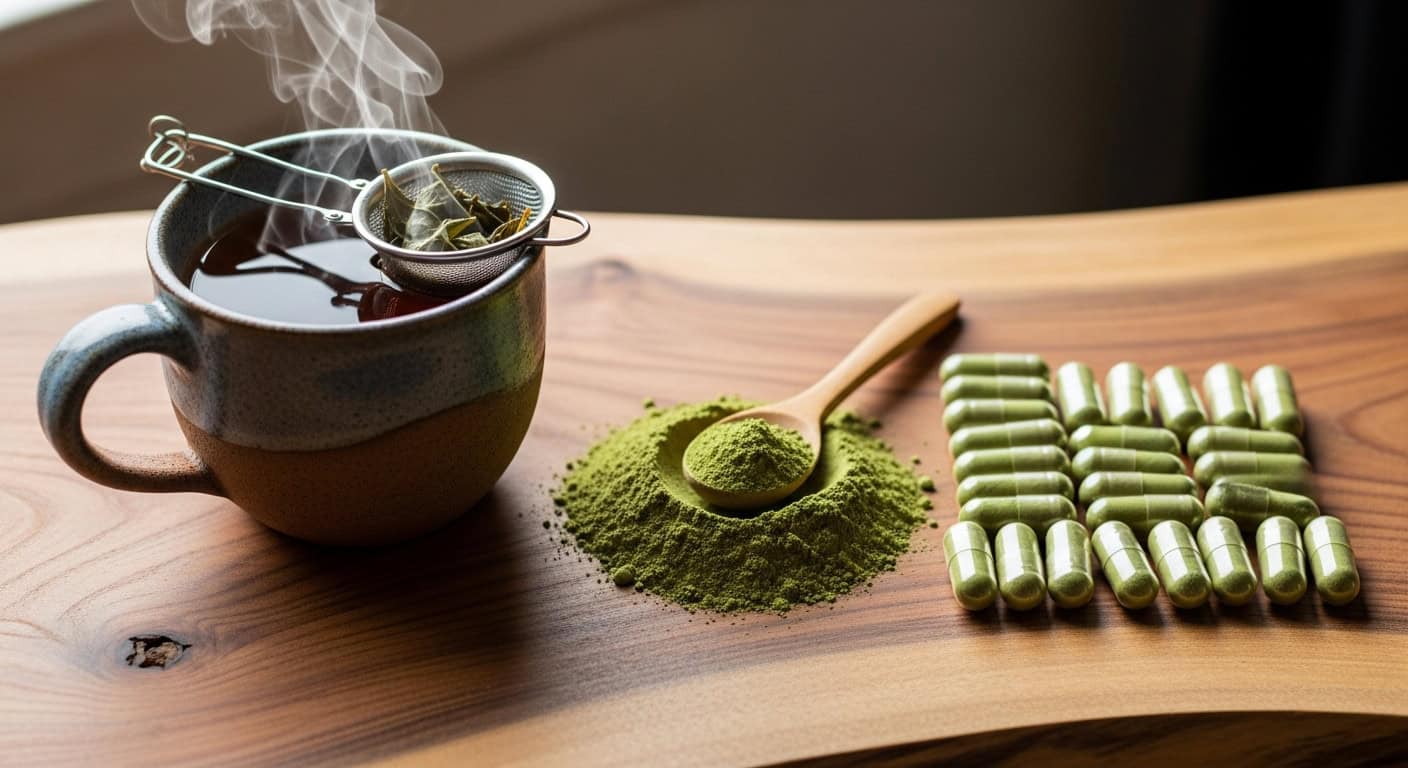
Kratom powder, capsules, and tea are the three most common ways to take Mitragyna speciosa, and the right one depends on whether you value flexible dosing, convenience, or a gentler onset. Powder lets you fine-tune the dose, capsules are pre-measured and tasteless, and tea offers a slower, ritual preparation. This guide compares all three on cost, taste, onset, and convenience.
What Is Kratom?
Kratom is a tropical tree native to Southeast Asia. People have used the leaves of this plant for centuries in traditional practices. The leaves contain compounds called alkaloids, with mitragynine being one of the most notable. These compounds interact with receptors in the body in different ways depending on the amount consumed.
Kratom products today are available in many forms, but the three most popular methods of consumption are powder, capsules, and tea. Each method offers a unique experience when it comes to taste, convenience, onset time, and duration. Understanding these differences helps you choose the format that fits your routine best.
Kratom Powder
Kratom powder is exactly what it sounds like. The dried leaves are ground into a fine powder that can be mixed with various liquids or foods. This is one of the most versatile forms available, and many experienced users prefer it for this reason.
How People Use Powder
The powder form gives you complete control over your serving size. You can measure out exactly what you need and adjust it over time based on your preferences. Most people mix the powder with water, juice, or a smoothie to mask the naturally bitter taste of the leaf.
Some popular ways to consume powder include mixing it into a glass of orange juice, blending it into a fruit smoothie, or stirring it into applesauce or yogurt. The versatility means you can get creative with how you take it. A small number of users even incorporate it into recipes, though the heat from cooking may affect the compounds.
One thing to know about powder is that it absorbs quickly in the digestive system. This means you might feel the effects faster compared to some other forms. The onset typically ranges from fifteen to thirty minutes, depending on your stomach contents and metabolism.
Pros and Cons of Powder
The biggest advantage of powder is its flexibility. You can easily adjust your amount up or down without any restrictions. It is also typically less expensive than pre-formed capsules since you are not paying for additional manufacturing and packaging.
The downside is definitely the taste. Kratom powder has a strong, earthy bitterness that many people find challenging. Some describe it as similar to green tea but much more intense. If you are sensitive to bitter flavors, mixing it with something flavorful becomes essential.
Another consideration is convenience. Measuring out powder takes a bit more time and requires a scale or measuring spoon. It is not as grab-and-go as some other options, which matters if you have a busy lifestyle.
Kratom Capsules
Kratom capsules are pre-measured doses of powder in a dissolving shell, designed for convenience and to avoid the bitter taste. The powder is sealed inside small gelatin or plant-based shells that you swallow like any other capsule. This format has become extremely popular among newer users and those who take it regularly.
How Kratom Capsules Work
Each capsule contains a pre-measured amount of powder. This takes the guesswork out of dosing since you know exactly how much you are consuming with each one. Most capsules contain between 0.5 and 1 gram of powder each, so taking several capsules at once is common.
The capsule shell dissolves in your stomach, releasing the powder for digestion. Since the powder is still intact inside the capsule, the effects are similar to taking loose powder. The main difference is that the capsule shell adds a few minutes to the onset time as it needs to dissolve first.
Capsules are incredibly portable. You can throw a small bottle in your bag or pocket and take them anywhere without making a mess. There is no mixing, measuring, or unpleasant taste involved. For many people, this convenience factor makes capsules worth the slightly higher price.
Pros and Cons of Capsules
The biggest benefit of capsules is definitely the taste issue. The powder is hidden inside the shell, so you never have to deal with the bitterness directly. This makes capsules much easier to take consistently, especially for those who struggle with the flavor of the powder.
Convenience is another major advantage. Capsules travel well, require no preparation, and can be taken discreetly with just a sip of water. There is no measuring or cleanup involved. This format works particularly well for people who are always on the go.
The main drawbacks are cost and flexibility. Capsules cost more to produce than bulk powder because of the additional manufacturing steps. You also lose the ability to easily adjust your amount by small increments since you are limited to whatever dose each capsule provides. Some users also prefer not to swallow large numbers of capsules, which can feel inconvenient for higher amounts.
Kratom Tea
Making tea from the leaf is one of the oldest methods of consumption. This traditional approach offers a unique experience that many people find pleasant and ritualistic. The process involves steeping the leaf material in hot water to extract the compounds.
How to Make Kratom Tea
Traditional tea preparation involves boiling the leaf or powder in water for an extended period, typically fifteen to thirty minutes. Some people add the powder directly to boiling water, while others use a tea bag format if available. After steeping, you strain out the plant material and drink the resulting liquid.
The taste of tea is generally more tolerable than raw powder because you are consuming an infused drink rather than the whole leaf. Many people enhance their tea by adding honey, lemon, ginger, or other flavorings. This customization makes the experience more enjoyable for those who are sensitive to the natural flavor.
Some users prefer to make a cold brew by letting the powder steep in cold water overnight. This method can produce a smoother taste but requires more time. Others add their daily powder dose to a pot of tea they are already making, effectively creating their own homemade version.
Benefits and Drawbacks of Tea
One advantage of tea is the ritual aspect. Taking a few minutes to prepare a warm drink creates a mindful moment in your day. This ritualistic approach appeals to many users who appreciate the ceremony of traditional tea preparation.
Tea also allows for fairly precise dosing when you are consistent with your preparation method. By using the same amount of leaf material and steeping time each time, you can achieve relatively consistent results. The effects tend to come on smoothly and may last a bit longer for some people.
The main limitation of tea is the preparation time required. Not everyone has fifteen to thirty minutes to spend brewing when they want to consume their portion. The flavor, while better than raw powder, still requires adjusting for many palates. Additionally, storing prepared tea for later use is not practical since the compounds can degrade over time.
Comparing the Three Forms
Powder, capsules, and tea differ mainly in dosing flexibility, taste, onset speed, and convenience. Understanding how they stack up against each other helps you decide which format makes the most sense for your situation.
Onset and Duration
Powder typically has the fastest onset because it mixes directly with stomach contents without any barrier. Capsules add a few minutes for the shell to dissolve, but the effects are otherwise similar. Tea may take slightly longer due to the liquid volume and preparation process, though individual experiences vary.
Duration tends to be fairly consistent across all three forms when the amount consumed is equal. Most users report effects lasting four to six hours, with tea sometimes on the longer end of that range. The exact timing depends heavily on individual metabolism and stomach contents at the time of consumption.
Taste Considerations
This is where the formats differ most dramatically. Raw powder has the strongest, most bitter flavor profile. Capsules eliminate the taste entirely since you never接触到 the powder inside. Tea falls in the middle, with a noticeable but usually manageable bitterness that can be masked with additions.
If taste is your primary concern, capsules are clearly the winner. If you do not mind the flavor and want maximum flexibility, powder is hard to beat. Tea offers a middle ground that many find pleasant with the right additions.
Cost Analysis
In general, bulk powder is the most economical option. You pay primarily for the leaf material itself without additional processing or packaging. Capsules cost more due to the manufacturing process, the capsules themselves, and often the additional packaging required.
Tea falls in the middle for cost if you are using traditional loose leaf. However, the cost of tea bags specifically made for this purpose can approach capsule pricing. When calculating cost, consider how much you consume regularly and factor in both the product price and your time for preparation.
Convenience for Different Lifestyles
For home use with plenty of time, powder and tea both work well. You can prepare things leisurely and do not mind the additional steps. For travel, work, or other situations where discretion matters, capsules shine. They require no preparation, make no mess, and can be taken without drawing attention.
Think about where and when you typically use these products. If you need something portable and quick, capsules are probably your best bet. If you enjoy the preparation process and have control over your environment, powder or tea give you more flexibility and often better value.
Community Experiences and Practical Tips
Regular users settle on a format through trial and error, often starting with capsules and moving to powder for flexibility. Hearing about common experiences can help you avoid common pitfalls and find what works best for you.
Many experienced users suggest starting with capsules if you are new because the consistent dosing makes it easier to find your ideal amount. Once you understand how different serving sizes affect you, you can experiment with powder for more flexibility. This graduated approach helps prevent wasting product or taking too much while you are still learning.
For powder users, orange juice remains one of the most popular mixers. The citrus flavor complements the herbal bitterness, and some people believe the vitamin C may help with absorption. If you use a smoothie, adding a banana can improve texture and add natural sweetness.
Capsule users often recommend taking them with a large glass of water. The capsules need liquid to dissolve properly, and staying hydrated supports overall digestion. Some people take their capsules at the start of a meal, while others prefer taking them on an empty stomach for faster onset.
Tea enthusiasts often emphasize the importance of quality water for brewing. Using filtered water rather than tap water can improve the taste of the final drink. Experimenting with steeping time also matters, as shorter steeps produce milder results while longer steeps extract more compounds.
Choosing the Right Format for You
The right kratom format depends on whether you value flexible dosing, taste-free convenience, or a slower, ritual preparation. There is no universal best option that works for everyone, and many long-term users actually rotate between different formats depending on the situation.
Consider what matters most to you in your daily routine. If convenience and taste-free consumption are essential, capsules will likely serve you well. If you value flexibility and cost savings, powder is probably the better choice. If you appreciate traditional preparation methods and do not mind the extra time, tea offers a unique experience.
Some users keep multiple forms on hand for different situations. You might use capsules during the workweek for convenience but switch to powder or tea on weekends when you have more time to prepare things properly. Having this flexibility lets you enjoy the benefits of each format without significant compromises.
Your experience level also plays a role in this decision. Newer users often appreciate the simplicity and consistency of capsules while they learn about their tolerance. More experienced users frequently gravitate toward powder for its versatility and cost-effectiveness. Tea appeals to people who view their consumption as part of a larger wellness ritual.
Understanding the Leaf and Its Compounds
Mitragyna speciosa leaves contain over forty alkaloids, led by mitragynine, that produce kratom’s effects. Mitragynine is the most abundant and studied, but researchers have identified over forty different alkaloids in the plant. These compounds work together in ways that are not yet fully understood.
The concentration of these compounds varies depending on the growing conditions, harvest time, and processing methods used. This is why the same amount from different sources can produce noticeably different experiences. Understanding this variability helps explain why dosing consistency matters and why users often stick with suppliers they trust.

When you consume any form of this herb, your body processes these alkaloids through the digestive system. The liver metabolizes the compounds, and various factors influence how quickly and completely this happens. Taking it with food versus on an empty stomach can significantly affect onset time and intensity.
Storage and Freshness
Kratom of any format keeps best in an airtight container in a cool, dark, dry place away from light and heat. All three forms benefit from cool, dark, and dry conditions away from direct sunlight and excess humidity. Exposure to light and heat can degrade the alkaloids and reduce effectiveness.
Powder should be stored in an airtight container to prevent moisture absorption. Many people use resealable bags or glass jars with tight-fitting lids. Avoid freezing powder as condensation when thawing can introduce unwanted moisture.
Capsules are generally more forgiving for storage since each dose is individually protected. Keeping them in their original packaging or a similar airtight container works well. Just ensure they are not exposed to excessive heat or humidity that could affect the capsule shells.
For tea, the dried leaf material used for brewing should be stored the same way as powder. Prepared tea is best consumed immediately and should not be stored for extended periods. The compounds can break down over time, especially in liquid form.
Making the Most of Your Chosen Form
Getting the most from a chosen kratom format comes down to small technique adjustments in how you prepare and time it. Small adjustments in how you prepare and consume your product can make a meaningful difference.
For powder users, finding the right mixer takes experimentation. Beyond orange juice and smoothies, some people use applesauce, pudding, or even chocolate syrup to mask the flavor. The key is finding something that works for your palate without interfering with digestion.
Capsule users can experiment with taking them at different times relative to meals. Some find that taking capsules thirty minutes before eating produces more predictable results. Others prefer taking them with food to minimize any stomach sensitivity. Pay attention to how your body responds to different timing strategies.
Tea drinkers might want to invest in a simple French press designed for loose leaf brewing. This makes straining much easier compared to using cheesecloth or a regular strainer. Temperature matters too, with most users finding that just below boiling produces good extraction without bitterness from over-steeping.
Quality Considerations
Underlying product quality matters across all formats, since capsules and tea are only as good as the powder inside them. Higher quality leaf material will generally provide a better experience than lower quality options. Look for suppliers who provide information about sourcing and testing practices.
Reputable vendors often offer third-party testing results that verify the alkaloid content and confirm the absence of contaminants. This testing is particularly important for powder and tea, where you are consuming the leaf material directly. Capsules made from tested powder inherit those quality assurances.
Freshness also affects quality. Products that have been sitting on shelves for extended periods may have degraded alkaloid content. Whenever possible, purchase from suppliers with high turnover or check production dates when available.
Rotating Between Forms
Many experienced users keep all three formats on hand and rotate between them to match the moment. This rotation can help prevent palate fatigue, especially if you find the taste of any particular form challenging over time.
Some people schedule their rotations based on the day of the week. Perhaps capsules work best for busy weekdays while you enjoy a悠闲 tea preparation on weekends. Others rotate based on their activities, choosing capsules for travel and powder for home use.
This flexibility is one of the advantages of having multiple options available. You do not have to force yourself to use a format that does not suit your needs in every situation. Experimenting with different approaches helps you develop a personalized routine.
Maximizing Value
If cost is a significant factor in your decision, powder generally offers the best value per serving. You can purchase larger quantities at lower prices per gram, and there is no additional cost for capsules or packaging.
However, value is not just about the purchase price. Consider the cost relative to the experience you are getting. Capsules that cost twice as much but save you time and frustration may represent better overall value for your lifestyle. Similarly, tea that you actually enjoy preparing and drinking provides value beyond just the ingredient cost.
Some users buy bulk powder and make their own capsules at home using capsule-filling machines. This approach combines the cost savings of bulk powder with the convenience of capsules. The initial investment in equipment pays for itself relatively quickly if you consume these products regularly.
Building Your Personal Routine
A consistent kratom routine, with steady timing and dosing, produces more predictable results from any format. Consistency in timing, dosing, and preparation creates predictable experiences that make it easier to assess what works best for you.
Many users find that taking their chosen form at the same times each day creates a sustainable habit. This does not mean you cannot be flexible, but having a default routine reduces decision fatigue and ensures you do not forget to take it when your schedule gets busy.
Pay attention to how different forms and amounts affect you throughout the day. Some people prefer taking it in the morning for a smooth start, while others save it for afternoon hours. Understanding your own patterns helps you optimize timing for your specific needs.
Kratom Capsules vs Powder vs Kratom Extract Side by Side
The honest difference between kratom capsules vs powder is convenience versus flexibility. Kratom capsules vs powder vs extract is a three-way comparison: capsules give pre-measured doses with no taste, powder lets you dial the serving exactly where you want it, and kratom extract delivers concentrated alkaloids in a much smaller volume. Each format works best for a specific use case rather than for everyone all the time.
For a daily user who knows their dose, kratom capsules win on convenience because there is no scale, no mixing, and no taste to manage. For someone still finding their sweet spot, powder is more useful because adjusting by half a gram is easy with a small scale. The best kratom format for an evening wind-down is often kratom tea brewed from powder, since the warm beverage is part of the ritual and the slower steep produces a gentler curve.
Consuming Kratom on Different Schedules
Different formats suit different times of day. To consume kratom in the morning for energy, plain powder mixed into juice gives the quickest onset. For a midday boost without leaving your desk, kratom capsules in a pre-portioned dose are simpler. In the evening, a slow kratom tea brewed from a red kratom leaf is the most pleasant approach for many users because the hot liquid pairs with relaxation rather than fighting it.
The difference between kratom formats also affects shelf life. Loose powder stored in an airtight jar holds quality for many months, kratom capsules give the same shelf life but in a more space-efficient package, and kratom extract products often have shorter shelf lives because of the higher alkaloid concentration. Storing any format away from heat, light, and moisture is the rule that matters most. Once you know your dose and your preferred routine, picking the format that fits your day is usually a quick decision.
Form of Kratom and Choosing the Right Format
The form of kratom you reach for shapes the experience as much as the strain you choose. Powder gives you the broadest range of preparation options and the most precise dose control. Capsules trade some of that flexibility for convenience, with pre-measured doses that travel well and bypass the taste question entirely. Extracts compress the alkaloid load into a small volume, which makes them efficient but demands more careful dosing because the potency is much higher per gram.
When you take kratom for the first time, plain powder is the most informative format because you can adjust the dose by tenths of a gram and develop a feel for your personal response. Capsules become more attractive once you know your dose, since the convenience pays off when you no longer need to fine-tune. Extracts are best left for after you have months of plain-leaf experience to know what a baseline alkaloid load actually feels like in your body.
How to Take Kratom in Each Format
To take kratom as plain powder, mix the measured dose into a small amount of juice, water, or a smoothie. Toss-and-wash works for some users but the bitter taste makes it a poor first experience. Capsules go down with a glass of water and start absorbing once the shell dissolves, typically within twenty minutes. Extracts in liquid form are dispensed from a dropper and held briefly under the tongue before swallowing for fastest absorption.
The kratom format you settle on will probably be a mix rather than a single choice. Many regular users keep capsules for travel and busy days, plain powder for considered evening preparation, and an occasional extract for specific use cases. Treating the three formats as complementary tools rather than competing options gives you the most flexibility for whatever the day brings. The kratom plant produces the same alkaloids regardless of how you prepare it; what changes is the speed, intensity, and convenience of delivery.
Choosing between kratom tea bags, capsules, and powder for different days
Different days call for different formats. Kratom tea bags suit a slow evening with a kettle and a quiet ritual. Kratom capsules suit a busy workday where measuring powder is inconvenient. Loose powder suits a deliberate session at home where you want to fine-tune the dose to the exact gram. Kratom users who keep all three formats on hand can pick the one that fits the moment rather than forcing every situation into a single preparation. Across kratom strains, the format choice is largely independent of the strain itself, so a green Maeng Da works equally well as tea, capsule, or powder depending on what kind of day you are having.
Kratom Tea, Powder and Capsules questions
Is Powder or Capsule Kratom Better?
Neither format is objectively better than the other. Powder offers more flexibility in dosing and typically costs less, while capsules provide convenience and eliminate the bitter taste. The best choice depends on your priorities. Many users start with capsules and switch to powder once they understand their ideal serving size, while others stick with capsules long-term for the convenience factor.
Are Kratom Capsules More Effective Than Powder?
Effectiveness is generally equivalent when comparing equal amounts of the same product. The capsule shell adds a few minutes to onset time due to dissolution, but the overall effects after that point are similar. Some users report feeling the effects of powder slightly faster since it begins digesting immediately, but the difference is typically minimal.
What Is the Most Cost-Effective Way to Use Kratom?
Buying powder in bulk quantities generally provides the best value per serving. Purchasing larger amounts reduces the cost per gram significantly compared to smaller packages. Some users further maximize value by buying bulk powder and encapsulating it themselves, though this requires additional equipment and time investment.
Which Form Is Easiest to Use for Beginners?
Capsules are often recommended for beginners because they offer consistent dosing and require no preparation or taste tolerance. New users can easily control their intake by counting capsules and can gradually adjust the number based on their experience. This simplicity helps beginners establish their baseline before experimenting with other forms.
Can You Mix Different Forms Together?
Yes, you can combine different forms if desired. Some users take capsules for convenience during the day while using powder or tea at home. However, it is important to be mindful of your total intake when mixing forms to avoid taking more than intended. Tracking your consumption across different formats helps you maintain consistent experiences.
Does Tea Have a Different Effect Than Powder or Capsules?
The fundamental effects are similar since all three forms contain the same alkaloids from the leaf. Tea preparation may slightly affect the balance of compounds extracted, and some users report smoother effects from tea. The differences are subtle and largely subjective. Most users find that their preferred form depends more on convenience and taste than meaningful differences in effect.
Ready to order? Buy kratom online in Canada from Kratom Earth and get lab-tested powder and capsules delivered by Canada Post.

Keep reading: Kratom vs Coffee · Kratom Vein Colors Explained · Kratom for Sex

Can You Fly With Kratom? Canada, US and International Rules
Flying with kratom is legal within Canada and most US states, and risky abroad. TSA and CATSA rules, packing tips, powder limits, and where never to bring it.

HMG Kratom Review: Phone Orders and the 7-OH Question
HMG Kratom takes orders by phone with little public info. Our review covers what’s verifiable, plus the 7-OH concentrate warnings every buyer should read.