
Blog
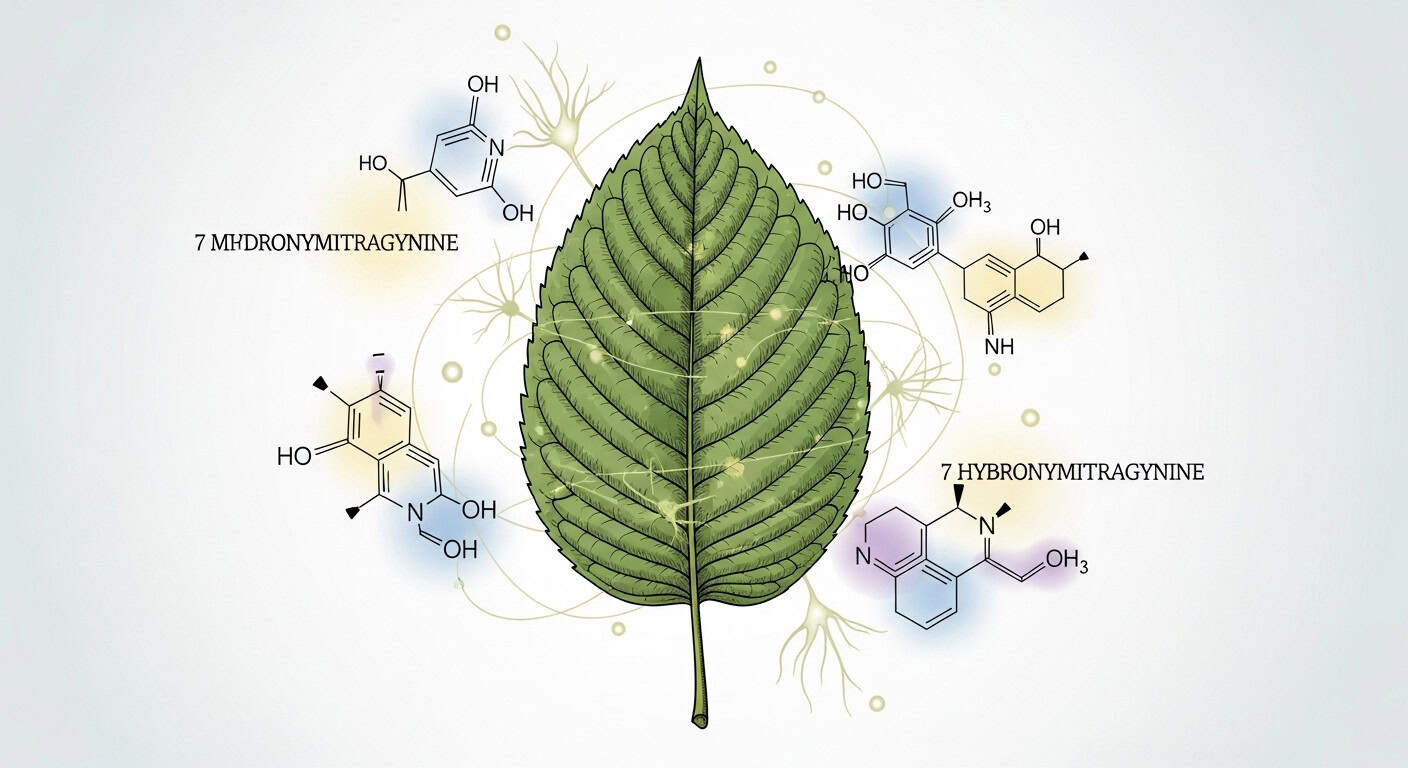
How Kratom Works in the Body
Kratom comes from the leaves of Mitragyna speciosa, a tropical tree in the coffee family that grows across Southeast Asia. People have chewed, brewed, and processed those leaves for generations. But what actually happens once kratom enters your system? The short answer lives in the plant’s chemistry. Kratom contains a set of natural compounds that interact with parts of your nervous system, and understanding how does kratom work means looking at those compounds first. This article walks through the science, plainly and neutrally, without hype. Kratom isn’t approved as a treatment for anything, and nothing here should be read as medical advice.
The Active Alkaloids in Kratom
The effects of kratom trace back to a group of naturally occurring molecules called alkaloids. Alkaloids are nitrogen-containing plant compounds, and Mitragyna speciosa produces a lot of them. Researchers have identified dozens of kratom alkaloids in the leaf, though only a handful have been studied in any real depth.
The star of the group is mitragynine. It’s the most abundant alkaloid in most kratom leaf, often making up the bulk of the total alkaloid content. When people talk about the chemistry of kratom, mitragynine is usually the compound they mean.
Then there’s 7-hydroxymitragynine. It shows up in much smaller amounts, sometimes just a trace, yet it’s considered more potent than mitragynine on a per-molecule basis. Small quantity, outsized influence. Interestingly, some 7-hydroxymitragynine appears to form when mitragynine is metabolized in the body, so the ratio you start with isn’t necessarily the ratio your system ends up working with.
Beyond those two, kratom compounds include a long list of minor alkaloids, names like speciogynine, paynantheine, speciociliatine, and mitraphylline. Each sits at a low concentration. Scientists don’t fully understand what every one of them does, and the combined effect of all these kratom alkaloids working together is still being mapped. A kratom extract concentrates these compounds, which changes the overall profile compared to plain leaf.
How Kratom Interacts With the Body
Here’s the part that gets the most attention. Kratom’s main alkaloids bind to receptors in your body called opioid receptors. These receptors are part of a signaling system that helps regulate things like pain perception, mood, and stress. Mitragynine and 7-hydroxymitragynine interact especially with the mu opioid receptor, which is the same receptor family that classic opioids act on.
That’s why kratom is often described as having opioid-like effects. But there’s an important distinction. The main alkaloids appear to act as partial agonists at the mu opioid receptor, not full agonists. A partial agonist activates a receptor, but only up to a point, producing a weaker or capped response compared to a full agonist. This is a factual description of a binding mechanism, not an endorsement, and it doesn’t mean kratom is safe or free of the risks associated with opioid activity.
Research also suggests kratom’s alkaloids touch other systems in the central nervous system, including receptors linked to adrenaline and serotonin signaling. That broader activity may help explain why the reported effect of kratom doesn’t map neatly onto any single drug category. The full picture of how these compounds behave across the nervous system is still being worked out.
Why Effects Seem Dose-Dependent
One thing kratom users report consistently is that the experience seems to change with the amount taken. At lower amounts, many people describe more stimulating, alerting effects. At higher amounts, reports tend to shift toward more sedating, heavy sensations.
Why would the same plant do seemingly opposite things? Scientists don’t have a fully settled answer. One idea is that different alkaloids, and different receptor systems, get engaged to different degrees depending on how much is present. The stimulating and sedating profiles may reflect a shifting balance of activity rather than a clean on-off switch.
Worth being clear here: these are patterns that kratom users describe, not guarantees, and not clinically established dose thresholds. Responses vary a lot from person to person. Body chemistry, tolerance, the specific product, even the particular batch of leaf can all shift what someone feels. We’re not giving amounts, because there’s no established safe or standard dose, and individual reactions are unpredictable.
Onset and Duration
How long does kratom last? Again, the honest answer is that it depends, and most of what’s known comes from user reports rather than controlled studies. Generally, people describe effects beginning somewhere in the range of a few minutes to under an hour after taking it, with the experience lasting a handful of hours before tapering off.
Several factors push those numbers around:
- Metabolism. Everyone processes compounds at their own rate. Age, genetics, liver function, and overall health all factor in.
- Form. Raw leaf powder, capsules, teas, and a concentrated kratom extract can each behave differently in terms of how quickly and how strongly effects come on.
- Stomach contents. Taken on an empty stomach, effects may come on faster. A full stomach can slow things down.
- Individual variation. Tolerance and body weight shift the timeline too.
Because so many variables stack up, two people taking the same product can report noticeably different timelines.
What the Research Says — and Doesn’t
This is where honesty matters most. The research on kratom is limited. There’s a growing body of laboratory and animal work, plus surveys of kratom users, but rigorous clinical trials in humans are scarce. That gap means many claims floating around online run well ahead of the actual evidence.
On the regulatory side, the picture is clear. The FDA has not approved kratom for any medical use, and the agency has issued warnings about it. In Canada, Health Canada has not approved kratom for human consumption, and it isn’t authorized to be sold or marketed as a food, natural health product, or drug for ingestion. Products are generally sold as botanical specimens, not as approved health products.
So while you’ll find plenty of discussion about the reported benefits of kratom, the scientific and regulatory reality is that those effects haven’t been confirmed through the kind of testing that approval requires. More study is needed, on the compounds, on safety, on long-term use. Anyone telling you the science is settled is getting ahead of the facts.
Risks and Responsible Use
Kratom is not risk-free, and the risks of kratom deserve straight talk. Because its alkaloids act on opioid receptors, regular use can lead to tolerance, meaning people may feel they need more over time to get the same effect. Dependence is possible, and some kratom users report withdrawal symptoms, things like irritability, aches, nausea, and trouble sleeping, when they stop after sustained use.
Other concerns to keep in mind:
- Drug interactions. Kratom’s activity in the central nervous system means it can potentially interact with medications, alcohol, and other substances. Combining it with other drugs, particularly other central nervous system depressants, can be dangerous.
- Product variability. Alkaloid content differs between products and batches, so effects aren’t consistent, and contamination has been a documented problem with some unregulated products.
- Individual health factors. Existing health conditions, pregnancy, and mental health considerations all change the risk picture.
If you’re considering the use of kratom, or already using it, talk to a healthcare professional, especially if you take prescription medication or have an underlying condition. Buying lab-tested products from a transparent source reduces some risks around contamination and mislabeling, but it doesn’t eliminate the risks tied to the substance itself.
Frequently Asked Questions
What is the main active compound in kratom?
Mitragynine is the most abundant alkaloid in kratom and the one most associated with its effects. A second compound, 7-hydroxymitragynine, is present in much smaller amounts but is more potent per molecule. Together with dozens of minor kratom alkaloids, they make up the plant’s active chemistry.
Does kratom work like an opioid?
Kratom’s main alkaloids bind to the body’s opioid receptors, especially the mu opioid receptor, which is why it’s described as having opioid-like effects. They appear to act as partial agonists rather than full agonists. That’s a description of how the compounds interact with the body, not a statement that kratom is safe or approved.
How long do the effects of kratom last?
It varies. Kratom users generally report effects starting within minutes to under an hour and lasting a few hours. Metabolism, the form taken, whether your stomach is empty or full, and individual body chemistry all affect the timeline.
Is kratom approved or regulated in Canada?
No. Health Canada has not approved kratom for human consumption, and it isn’t authorized for sale as a food or health product meant to be ingested. In the United States, the FDA has likewise not approved kratom for any medical use.
Is kratom safe to use?
Kratom carries real risks, including tolerance, dependence, withdrawal, and potential interactions with other substances. Research is limited, and no health authority has confirmed it as safe or effective. If you’re thinking about using it, speak with a healthcare professional first.
Kratom Earth makes it simple to buy kratom online in Canada, with every batch lab-tested and shipped discreetly from BC.

Keep reading: Kratom Ontario 2026: What Ontario Is Searching For · How to Buy Kratom with e-Transfer in Canada · Red vs Green Maeng Da: What’s the Difference?

Can You Fly With Kratom? Canada, US and International Rules
Flying with kratom is legal within Canada and most US states, and risky abroad. TSA and CATSA rules, packing tips, powder limits, and where never to bring it.

HMG Kratom Review: Phone Orders and the 7-OH Question
HMG Kratom takes orders by phone with little public info. Our review covers what’s verifiable, plus the 7-OH concentrate warnings every buyer should read.