
What We Test For at Kratom Earth
Every Kratom Earth batch undergoes independent third-party laboratory testing before it is approved for sale. Our testing focuses on microbiological safety, heavy metal screening, and alkaloid profile verification to ensure identity, purity, and consistency.
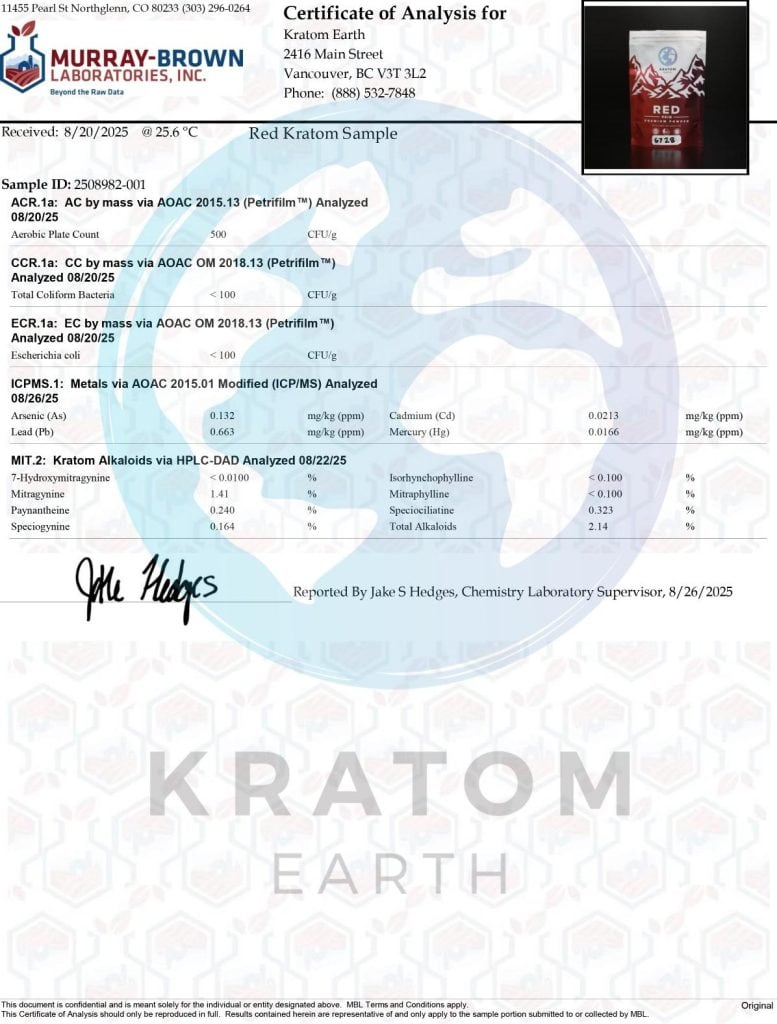
All testing is performed by an accredited independent laboratory, including Murray‑Brown Laboratories, Inc., and documented through Certificates of Analysis (COAs).
Microbiological Safety Testing
Because kratom is a natural botanical harvested and processed in open environments, microbiological screening is essential.
Each batch is tested for:
-
Aerobic Plate Count
Measures overall microbial load and general cleanliness of the material. -
Total Coliform Bacteria
Used as an indicator of sanitation and handling conditions. -
Escherichia coli (E. coli)
Screened to confirm absence of this pathogenic indicator organism.
These tests help confirm that the product meets acceptable microbial safety thresholds for botanical powders.
Heavy Metal Screening
Botanical materials can naturally absorb trace elements from soil. To ensure safety, every batch is screened for heavy metals, including:
-
Arsenic (As)
-
Lead (Pb)
-
Cadmium (Cd)
-
Mercury (Hg)
Results are reported in parts per million (ppm) and reviewed against established safety specifications for botanical products.
Alkaloid Profile & Identity Testing
In addition to safety testing, we verify kratom’s alkaloid composition to confirm botanical identity and consistency.
Alkaloid testing includes measurement of key naturally occurring compounds, such as:
-
Mitragynine
-
7-Hydroxymitragynine
-
Paynantheine
-
Speciogynine
-
Speciociliatine
-
Isorhynchophylline
-
Mitragynine-related alkaloids
-
Total Alkaloid Content
This testing helps ensure that each batch reflects a consistent kratom alkaloid profile without unexpected deviations.
Certificates of Analysis (COAs)
For every tested batch, a Certificate of Analysis documents:
-
The specific tests performed
-
Quantitative results
-
Sample identification and testing dates
COAs are maintained internally and can be referenced by batch or lot number for transparency.

Important note:
This information describes Kratom Earth’s quality control and testing practices only. It is not medical or legal advice. Regulations regarding kratom vary by region, and customers are encouraged to review local laws and guidelines.